How to Deal With Bullies Without Fighting
When a child is being bullied, fighting back can sometimes feel like the only way to stand up for themselves. But responding with aggression can escalate the situation, and it doesn’t necessarily give a child the confidence to handle the next encounter any differently.
In this episode of the Bully Proof Your Child podcast, we read Chapter 5 of Dr. Terrence Webster-Doyle’s Why Is Everybody Always Picking on Me? A Guide to Handling Bullies. The chapter explores how to deal with bullies without fighting, using a range of nonviolent responses that children can practice before they find themselves in a difficult situation.
The goal isn’t to find one response that works every time. Instead, children can build confidence by learning several ways to respond and understanding when it’s time to get help from an adult.
Podcast Transcript
Today we are reading Chapter 5 in Why Is Everybody Always Picking on Me? A Guide to Handling Bullies, written by Dr. Terrence Wiltshire Doyle. Chapter 5 is called How Victims Can Become Winners.
The story I’m going to read today is Do You Mind If I Warm Up?
Do You Mind If I Warm Up? (Story)
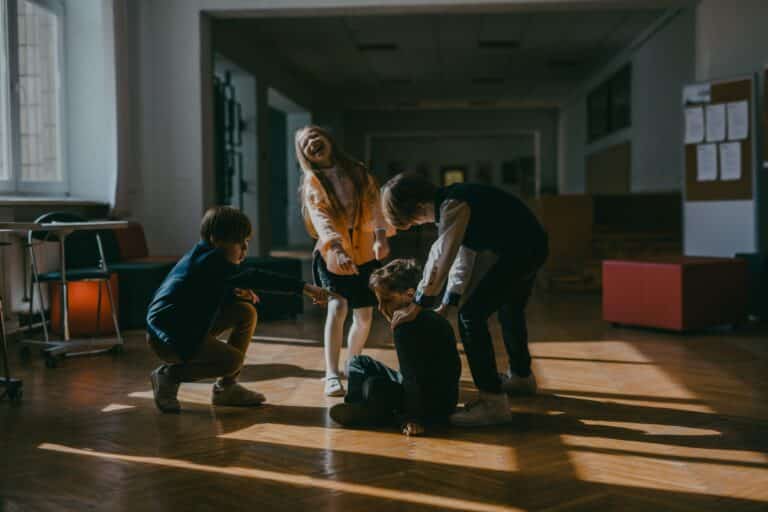
A big kid had been picking on a younger boy for months. The younger boy had tried many times to get out of fighting, which worked for a while, but this older, tough kid kept coming back. Nothing seemed to stop him.
Now he was coming down the street again after the younger boy. “Hey you, punk, what makes you think you’re so hot?” the big kid shouted. The younger boy had nowhere to go since his way was blocked by an apartment building and one long, dark alley.
The big kid stood tall and close to the younger, shorter boy. “So I finally got you away from your friends. I’m going to pulverize you, squirt, because you wouldn’t give me your lunch money.”
The young boy stood calmly and looked the older youth straight in the eyes. “I see that you intend to fight me. I’ve tried everything to not fight, so I guess now I’m going to have to fight you. But before we start, do you mind if I warm up?”
The bully agreed, and the young boy began punching, kicking, and striking the air with great power and speed. It was obvious to the bully that this youth knew how to defend himself. Pausing to assess the younger boy’s skill, the bully made a lame excuse and a rapid retreat.
Our Best-Selling Resources
-
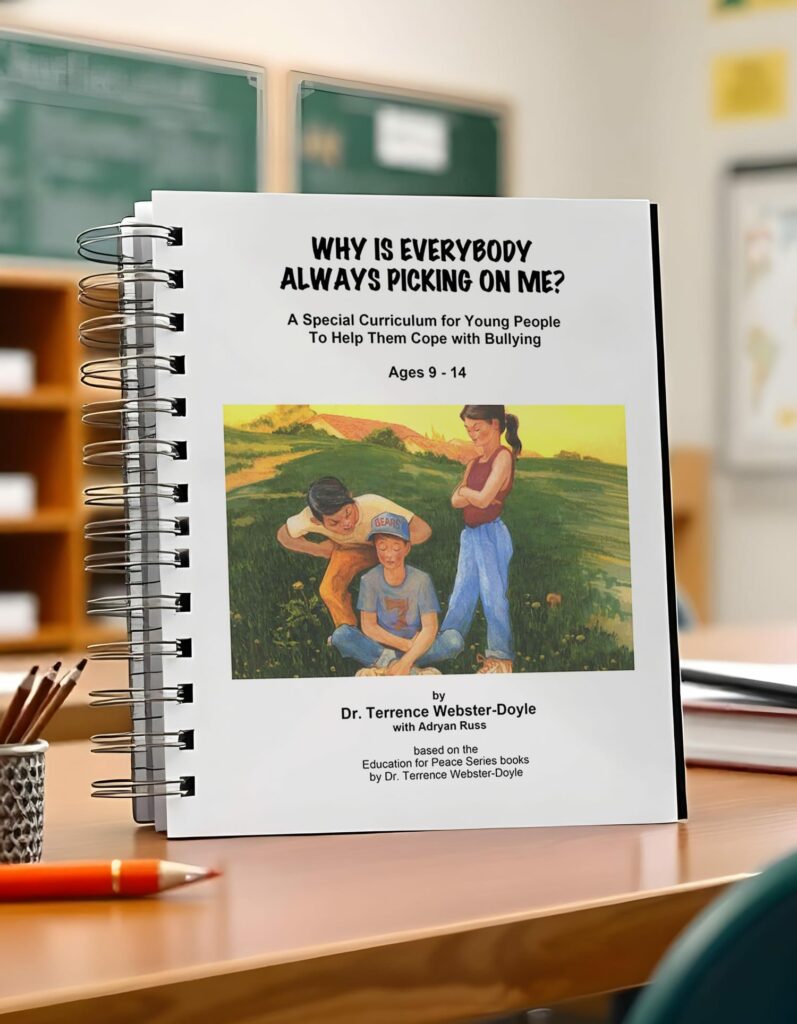
Why is Everybody Always Picking on Me? Curriculum
$0.00 -
Why Is Everybody Always Picking On Me? Workbook
$0.00 -
Why is Everybody Always Picking on Me? Book
$0.00 -
12 Ways to Act With Respect Curriculum
$0.00 -
12 Ways to Walk Away with Confidence Curriculum
$0.00 -
Why Can’t I Do What I Want? Curriculum
$0.00 -
Why is Everybody Always Picking on Us? Book
$0.00 -
Why Do We Bully? Curriculum
$0.00 -
The Complete Bully Busting Program
$0.00 -

Why Am I Always Picking on Myself? Curriculum
$0.00 -
Defeat The Bully Without Fighting Curriculum
$0.00 -
Why is Everybody Always Picking on Us? Workbook
$0.00
A Real Example of Confidence Without Fighting
This is the true story of a famous karate teacher when he was a young boy. It goes to show that victims can be winners and that there is great strength in the way of nonviolence.
Learning Confidence Through Self-Defense
One way to learn how to defend yourself and achieve the confidence not to fight is to learn a physical defense technique like karate. Karate teaches you how to block, punch, kick, and strike. It is important for you to keep in mind that karate teaches these skills to protect you, to help you feel secure in your ability to protect yourself. Knowing these skills keeps you from being afraid when a bully picks on you.
Rather than tense up, you center yourself and prepare to protect yourself. You feel so confident knowing these skills that your attacker is often intimidated before you ever use them. You use your mind instead of your fists.
Karate should be learned from a qualified and intelligent martial arts teacher. It cannot be learned properly from a book or even online in a podcast or video. If you decide to learn physical self-defense techniques, take the time to find a qualified instructor, someone who teaches physical skills and the nonviolent mental skills that go with them.
Now back to the book.
I am a karate teacher who has taught for over 30 years. (Please keep in mind that Dr. Terence Webster Doyle wrote this.) I teach a style of karate called Taki Namido. This style of karate shows a young person like yourself how to have the confidence not to fight. At the same time, it teaches students how to get out of a threatening situation by nonviolent means.
What we do really works. I have taught hundreds of young people how to solve conflict nonviolently. The important thing to remember is that a student must be taught both the physical and mental skills of self-defense.
Non-Violent Alternatives That Work
The physical skills give you the confidence that you can handle a fight if it ever came to that, and the mental skills offer you a way to resolve a fight before the fighting ever begins.
Here are twelve ways kids have used that definitely work.
Making Friends
One of the easiest ways to stop a fight from happening is to be friendly and kind to the bully. Most bullies feel hurt or angry, and being friendly may help them feel better. If they think you’re treating them with respect, they may offer you respect too, but be careful. Bullies aren’t used to being treated with kindness, so they may not respond well at first.
We have a whole episode on this.
Using Humor
Sometimes you can stop a fight by being funny or telling a joke, but be careful. The bully might think that you’re making fun of them, so make sure they know the joke or story is not meant to be at their expense.
We also did an episode on this.
Using Cleverness to Avoid Conflict
Cleverness means that you fool the bully by pretending. Remember the swordsman from the School of No Sword from a few episodes ago? He left the bragging samurai on a far island by himself.
Other ways to trick a bully include pretending to be sick, pretending you have poison oak or ivy, depending on where you live, speaking in a foreign language (you might even make one up), telling the bully you just had an operation, saying your mother or father is about to pick you up, or telling the bully that your mother, father, brother, or sister is a member of the police or a karate instructor. Can you think of others?
Cleverness is a good way to stop a fight because it makes the bully think of something else and takes their mind off hurting you. Again, be careful how you do this. The idea is to prevent a fight.
Walking Away
You may be angry and frustrated and feel you have a right to stand up for yourself and fight back when someone has been bullying you, but does fighting back solve anything? All it does is hurt people.
When you fight back, you become like the bully, using violence as a way to solve the problem. Walking away may seem like a difficult thing to do, but just think, you haven’t been hurt and you haven’t hurt anyone else. It takes a lot of strength to simply turn your back and walk away.
Agreeing with the Bully
Many fights start when a person feels insulted. If someone calls your name or tries to embarrass you, instead of responding with anger or fighting, just stop.
Wait and watch what happens inside of you. What do you see? Do you feel angry or hurt inside? Do you feel like punching or slapping the one who insulted you? If your answer is yes, it’s important to try something new.
First, just watch those feelings inside of you. Watch them come up and watch them go. Don’t react. Don’t do anything about them. Just let them be there.
After you feel calm again, agree with the bully. For example, if the bully calls you “shorty” and accuses you of being afraid to fight, tell them that this is true, that you are short and you don’t like to fight.
Agreeing doesn’t mean that you’re not as good as someone who’s taller than you or that you are a coward because you don’t want to fight. These are facts and nothing to be ashamed of. If what the bully said is untrue, then you can disagree and gently tell the bully that what they said is simply not true.
Just Walk Away
Or you can walk away and avoid the bully’s insults. The bully wants to get you angry so you will fight, but if you don’t react to the insult, you are like a bamboo in a strong wind. You bend, but you don’t break. You straighten up unhurt and you prevent a fight.
If you go through something like this, talk about it with a friend, your parents, or a teacher. Experiences like this can be frightening, and it feels good to have someone listen to what you’ve been through and comfort you.
Another option is refusing to fight. A fight takes two people. If you refuse to fight, this can stop the bully from hurting you. You may feel angry and afraid. You may want to run away or cry. You may feel you have to stand there and get beaten up because your friends are watching and they’ll think you’re scared if you run away.
But turning your back, walking away, and refusing to fight are all alternatives that take great strength, and they are all better than fighting.
Standing up to a Bully
Standing up to a bully means that you tell them with your words, with your body, and with how you present yourself that you do not want to be bullied. You can say something direct like, “I know you don’t like me, but I’m not going to let you hurt me.”
You may think that this would make a bully want to fight you even more, and it might. But many times, standing up to bullies surprises them. They’re expecting you to be afraid, and when you’re not, they back down.
It can depend on what else is happening in the moment. If there are other kids standing around watching, standing up to the bully may just make them want to fight you even more. But if you’re alone with the bully, it may work.
And remember, standing up means that inside yourself you have decided you are not going to tolerate being bullied any longer. Standing up to a bully is an important decision. Once you make it, you will find the courage to use alternatives.
Screaming and Yelling
The human voice is very powerful. Singing is a good example. It can make you feel sad, happy, full of energy, or even angry, so using your voice is a very good alternative.
You can scream, “No, I won’t let you hurt me,” or yell “Help” or “Fire.” You may think it’s silly to yell “Fire,” but it can cause people to act very quickly and come to see what is happening. Do this only when absolutely necessary.
You can also use a kiai. A kiai in karate is a strong yell used with a block, punch, kick, or strike. It gives power to a self-defense technique because it causes the stomach muscles to tighten, which adds strength. But a kiai can also startle a bully, and for a brief moment they may forget about fighting, giving you a chance to get away before anything further happens.
Ignoring
This is an alternative that requires caution.
When you ignore the bully, you pretend that they are not there. This may work with some bullies, and it may backfire with others. You have to practice to find out.
Sometimes you may want to use more than one alternative at a time. Combining strategies can be more powerful than using one alone. Ignoring is an option you may want to use in combination with walking away or cleverness.
Using Authority
There are two ways you can use authority to demonstrate your power.
One is to show the bully that you are not afraid and that you will not allow them to hurt you. You are being your own authority, using your own power.
Two, call someone else to help you who is more powerful than the bully. Powerful doesn’t always mean having physical strength. It can also mean someone who is older and in a position of authority, like a parent, teacher, or police officer. You may think that calling an adult who is in power is ratting or being a coward, but this is not true.
If you have tried to stop the bully using one or more of these alternatives and the bully keeps trying to hurt you, you have a right to get someone older who has authority over young people to help you. This is what parents, teachers, police officers, or playground supervisors are there for. If you do this, you may avoid getting the kind of beatings that I got as a kid when there were no adults around.
Kids and adults need to stop bullies. No one has the right to bully anyone. Hopefully, the person you ask for help will be wise enough to settle the situation in a gentle and intelligent way.
There are kids and adults who have been specially trained to do this. Is anyone trained to handle arguments and fights on the playground at your school?
Whether anyone else is trained or not, you will benefit from learning skills that will help you end conflict before anyone gets hurt.
Reasoning or Talking it Out
Some kids just know how to speak well. They learn to use words to convince other people of what they want or don’t want. For the rest of us, learning to reason or talk things out takes practice.
Perhaps your parents or teachers can help you learn this skill. It’s very important to know how to reason, to think through what to say and do so that you don’t hurt others and they don’t hurt you. As you grow into adulthood, it becomes more and more important to think clearly and intelligently.
As you take on more responsibility, there will be more situations to work through. If you start now, it will be easier later. You have lots of opportunities to practice reasoning skills.
Take a Stand (as a Last Resort)
And finally, taking the karate stance. Hopefully you will have tried everything you could to stop a fight before you take a karate stance. This alternative should be used last because it means using your physical body in a way that shows a bully you are strong, you know how to protect yourself, and you are prepared to defend yourself.
Taking the stance does not mean you’re going to fight. It means you’re ready to, if necessary. You hope that by taking the stance, the bully will back down and leave you alone. If there are kids around watching, keep in mind that with an audience, the bully might feel they are now forced to fight or will lose face, so be careful how and when you use this alternative.
Now that you know some new alternatives, you will be able to try them out for yourself. To use them, you will need confidence, and you will gain confidence by using them. This confidence is your real power. You will feel happier, more in control of your life, and your friends will see that you are stronger for not fighting.
Building Confidence Through Practice
There are many other ways to stop conflict before it starts without resorting to violent physical means. We have just mentioned a few. Get together with friends or family and talk about the variety of non-violent alternatives that are available.
Remember that a bully has no right to hurt you. When you learn non-violent alternatives, you are better able to defend yourself. You already know that the reason you want to be able to defend yourself is to have the confidence not to fight.
Confidence comes from practicing these non-violent alternatives. They are skills, just like playing an instrument or participating in a sport, and the way to do them well is to practice them often.
Why Practice Matters
Anyone who is interested can learn these skills, but it takes training and practice. Just as a singer or a keyboard player knows several songs and plays each one for a different effect or occasion, every situation in which you use a non-violent alternative has a different mood. Each moment is new and needs to be looked at freshly.
An alternative that works in one situation may not work in another. Having options in the back of your mind, ready to use, can help you avoid being bullied. Sometimes a bully does not respond to your efforts and may need the professional help of a counselor.
When to Ask for Help
If you suspect this is the case, get help. It’s always okay to get help when you need it. If you’re afraid the bully might want to get back at you, ask an adult to get involved without letting the bully know you were the one who asked for help.
In the sections that follow, you will find practice situations that can help you deal with bullies. Practice these over and over so you’re prepared to act in a real situation if one comes up. In addition to preparing you for real-life situations, the exercises are also really fun.
Role-Playing to Build Confidence
The first one is role-playing as a way to understand. In order to help you experience this feeling of confidence, I have created some role-playing samples for you to try. If you’re a bully, it’s important to experience what it feels like to be a kid being picked on.
And if you’ve been a victim, it’s important to step into the shoes of a bully so you can understand their feelings. Have you ever role-played? Role-playing is just what it sounds like. It’s playing a role or a part as if you were in a play.
Understanding Both Sides: Bully and Victim
In the role-play situations that follow, you will get a chance to make use of the non-violent alternatives you learned in the previous section. In each role-play situation, play the victim and play the bully. It doesn’t matter which you play first, as long as you have the opportunity to play both.
This way, you have a chance to see the situation from all sides. You can perform the role-play with friends, parents, or teachers. These role-plays also include the bully and the victim’s alter egos.
The alter-ego consists of inner thoughts and feelings, what we feel inside but don’t show outside. These unspoken feelings may help you understand why the bully and the victims feel the way they do.
A note from Sam: if you would like to download these role-plays, which is probably easier than listening to them, you can do there here.
Roleplay #1
The cast of characters for the first role-play is the bully, the victim, and Mr. Wood. The bully can read the bully alter-ego part as an aside, under his or her breath. The victim can also read the victim alter-ego part, but it should not be directed toward the bully, only to the audience or as an aside.
So, remember to really get into your part, to act out the alter-ego parts, and to ask for help if you need it.
The bully, in their alter-ego:
“Boy, it looks like she has a lot of money. Look at her nice clothes. I wish I had her money. Her parents must really love her.”
Bully, normally:
“Give me your lunch money.”
Victim, using the deny or cleverness response:
“I don’t have any money. I bring my lunch from home.”
Victim, in their alter-ego:
“This is scary. I feel safer because I practice how to handle myself when I feel threatened. What was it my teacher told me about getting out of this type of situation without fighting?”
(Takes a deep breath and feels the scared feelings.)
Bully (reaches out and grabs the victim):
“I don’t believe you.”
Victim, trying to use trickery:
“Be careful, I’ve got poison oak.”
Bully:
“I still want your money.”
Victim, using authority (calls a teacher):
“Mr. Wood, I need some help.”
Mr. Wood says to the bully:
“Do you need money? I’ll be glad to loan some to you for now. I can also help you find ways to earn money if you need it so badly.”
Bully:
“Yeah, I do need money bad. My family is in trouble. I’ll pay you back by working, I promise. Or maybe you can find me a job somewhere.”
Reflecting on Role-Play #1
That’s the end of the role-play, and now we have some questions:
- How did it feel to bully the victim?
- How did it feel to use cleverness?
- If you were the bully, what happened when you heard about the poison oak?
- If you were the victim, how did you feel about calling an authority?
Please think about these questions as we move on to the next role-play.
Roleplay #2
Bully:
“Hey Brian, give me your homework.”
Bully, in their alter-ego:
“This kid always gets the teacher’s attention because he knows all the answers. The teacher likes him. He must be good. Schoolwork is hard for me. I don’t like it when the teacher calls on me and I don’t know the answers. Wish I could please a teacher, but I must be dumb. I never get the teacher’s attention because I’m bad.”
Victim, making friends and talking it out:
“I’d like to help you, but I already turned it in this morning.”
Victim, in their alter-ego:
“Oh no, it’s him again. How do I get rid of this guy?”
Bully:
“You always get good grades, so you’re going to do my homework from now on, or else you’re in big trouble.”
Victim:
“I can’t do your homework for you because that isn’t honest, but I’ve got a better idea.”
Bully:
“Yeah? What’s that, Brian?”
Victim:
“I’ll make you a deal. I’ll help you with your homework if you do something for me.”
Bully:
“Like what?”
Victim:
“Let’s meet after school today and talk about it. Maybe we can help each other. I hear you’re really good at basketball, and I’m lousy at it. Maybe you can teach me something.”
Reflecting on Role-Play #2
Some questions to think about:
- If you were the victim, how did you feel when the bully demanded your homework?
- If you were the bully, what did you think you would gain from getting the victim to do your homework?
- As the victim, how did you feel offering to help the bully and getting the focus away from you?
- As the bully, were you surprised that the victim thought you could be helpful? Why or why not?
Please think about these questions before we move on to role-play number three.
Roleplay #3
Bully:
“Hey, you stupid punk, you sat in my bus seat. If you do it again, I’ll break your face.”
Bully, in their alter-ego:
“This guy looks easy to beat. Now it’s my turn to win. I’m always getting it at home, and the big kids at school beat me up. I’m ticked. I feel like busting. I feel like hurting someone else for a change.”
Victim, using a greeting:
“Sorry, I guess I was stupid. All right, here’s your seat.”
Victim, in their alter-ego:
“Wow, this guy could hurt me. I wish I could run away, but that just makes me feel lousy.”
Bully:
“What did you take my place for then, punk, huh?”
Victim:
“I didn’t know it was your seat.”
Bully:
“Everyone knows this is my seat.”
Victim, trying to make friends:
“I’m new at school and I don’t know my way around yet. Maybe you can help me.”
Bully:
“I don’t help punks. I think you need a lesson in good manners.”
(They make a threatening gesture.)
Victim, using humor and cleverness:
“Wait, before you hit me, I want to let you know that if you beat me up, my sister will be upset because she likes you. She told me that she wanted to go out on a date with you. She likes kissing boys.”
Bully:
“Yuck. Girls are goofy, and I ain’t going to let no girl kiss me. Hey, are you joking? That’s a laugh. What a clown.”
Reflecting on Role-Play #3
Some questions to consider:
- As the bully, did you feel good getting the victim out of your seat?
- As the victim, how did you feel when you decided not to run away but to talk to the bully?
- As the bully, were you surprised to have the victim ask you for help? What did this do to your tough exterior?
- And finally, as the victim, were you scared using humor? Could you tell how the bully was going to react?
Final Thoughts on Non-Violent Conflict Resolution
These situations are all made up. They are based on real occurrences. If they are not realistic for your particular situation, you can create your own role-playing scenes.
In order for all of this to work for you, you must practice. Your mind is a source of power, but you need to exercise it in the same way an athlete exercises their body. If it’s going to be ready to use when necessary, it has to be in good shape.
And remember, to cope with bullies of any kind, use the power of your mind.
And that is the end of Chapter 5 in Why Is Everybody Always Picking On Me? If you would like to download the book, you can do that here.